Most people who need to wear glasses can wear contact lenses. There are two main types of contact lenses:
Modern contact lenses are very safe, as long as you follow your optometrist’s advice about how to wear and look after them, and have regular check-ups. However, it is possible that anything that touches your eye could cause an infection.
To reduce the chance of infection, you should always wash and dry your hands before touching your eyes or your contact lenses. If you are at home, try to use your own towel. If you are not at home, dry your hands with an air dryer or paper towel wherever possible. Never rinse your lenses or contact lens case or store your lenses in tap water because this could cause a very serious eye infection. You should also avoid showering or swimming while wearing your contact lenses. If you wear daily contact lenses, you just throw them away after use.
The type of lens that is best for you will depend upon several things, including how often you want to wear your lenses. For example, do you want to wear them just for certain activities, such as sport? Or do you want to wear them most of the time instead of glasses?
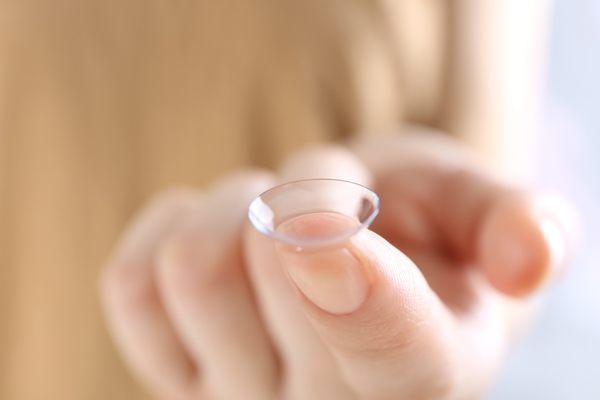
Most contact lenses fitted in the UK are soft lenses. They are available as single-use daily, fortnightly and monthly disposable lenses. There are also specialist soft lens designs that last for longer. As soft lenses are more comfortable at first than RGP lenses, they are ideal if you only want to wear lenses occasionally or haven’t worn lenses before.
RGP lenses can take a little more getting used to than soft lenses. This means they may not be suitable if you only want to wear contact lenses occasionally. RGP lenses last longer than soft lenses and are usually replaced every one to two years. This means that they may be cheaper in the long term than disposable soft lenses.
RGP lenses may be better if you have irregular-shaped eyes or astigmatism. Special types of RGP lenses that you wear only at night are also available. These temporarily correct short-sightedness so that you do not need to wear glasses or contact lenses during the day. This treatment is called orthokeratology.
You might find that your eyes feel dry if you wear contact lenses. This may be worse with some types of lenses than others. If you notice this, make sure you mention this when you go for your contact lens check-up so that your optometrist or contact lens practitioner can suggest what to do about it. You may find that changing to a different type of contact lens or reducing the amount of time you wear your lenses will help you.
Cosmetic and novelty contact lenses, also known as plano or zero-powered lenses are used to temporarily change the colour of your eyes or provide zombie or vampire eyes for a fancy dress party. As these touch your eyes, it is important that they are fitted to make sure they are safe to wear. In the UK it is illegal to sell these contact lenses unless this is by or under the supervision of an optometrist, dispensing optician or doctor, so make sure you always buy your lenses from somewhere that does this.
Novelty lenses are often purchased by people who do not wear contact lenses regularly and who may not know how to handle and care for them safely. It is essential that you are able to remove and insert your contact lenses safely and know how to keep them sterile.
Driving with novelty lenses at night (even if you wear glasses over the top) is also a potential danger. If the lenses are strongly tinted or opaque they may impair your vision if the hole that you look through does not align with your pupil.
Providing you have a valid contact lens specification, you can buy your contact lenses from wherever you wish. If you do not purchase from the practice where your lenses were fitted, make sure that you buy your lenses from a reputable source, and that they are the same as the ones you were fitted with and which are on your specification. Only then can you be sure that the lenses are suitable for you. Wherever you purchase your lenses from, it is important to have regular check-ups.
It is important to have regular check-ups to make sure that your contact lenses are still suitable and are not damaging your eyes. Your optometrist will tell you how often you need to have check-ups, as this will depend on factors such as the type of lenses that you wear and how long you wear them for. Wherever you buy your lenses you should check whether the price you are paying includes these check-ups. Your contact lens specification (prescription) will contain an expiry date. You will not be able to buy lenses after that date. It is important that you have a contact lens check-up before your specification runs out if you want to continue to buy lenses.
Research by the College of Optometrists suggests that two-fifths of people don’t wash their hands before handling their lenses. To reduce the chance of infection you should always wash and dry your hands before touching your eyes or your contact lenses. Use liquid soap rather than a bar of soap. If you are at home you should try to use your own towel. If you are not at home you should dry your hands with an air dryer or paper towel wherever possible.
If you have reusable lenses, clean and store them using the solutions recommended by your contact lens practitioner, and throw away solutions that are past their sell by or discard by date. Never rinse or store your lenses in tap water as this can cause a very serious eye infection. And don’t forget your contact lens case. Make sure that you clean the case every day – by rinsing it with fresh contact lens solution and letting it dry – and replace it as recommended by your contact lens practitioner.
If you drop your lens- make sure you clean it with your recommended solution before putting it in your eye. Never lick your lenses before inserting them! This is unhygienic and can cause eye infections.
Watch our video on applying soft contact lenses:
Your contact lens practitioner will make sure that you are able to handle the lenses safely before you take them home. Most people are able to put their lenses in and take them out without any problems, although it can take some practice. If you need to wear glasses for reading, you may find you need to put your glasses on to handle your contact lenses.
Some contact lenses are lightly tinted to make it easier for you to see them when you are putting them in and taking them out. This tint will not affect your sight and you will not notice it when you wear your contact lenses.
Watch our video on removing soft contact lenses:
Don’t leave your lenses in longer than advised by your optometrist. Although some contact lenses have been designed to wear overnight, research has shown that sleeping in contact lenses increases the risk of infection, including corneal ulcers. Our advice is to remove your lenses before you go to bed. If your optometrist has told you that you can sleep in your contact lenses, it is important that you know what complications may develop and how to look out for them. You must also be able to take your lenses out in an emergency and we recommend you have some back-up glasses in case you cannot wear your contact lenses.
Sometimes, if you accidentally rub your eyes, for example, your lens can move from the front of your eye and become lodged under your eyelid or another part of your eyeball. When this happens attempt to carefully slide the lens back onto your cornea or remove the lens. If you can locate the lens you can try moving it back into place (or to the corner of your eye, where you can remove it more easily) by gently massaging your closed eyelid. If you are unable to do this, contact your optometrist for advice. Contact lenses can’t get lost behind the eye.
You should avoid showering while wearing your contact lenses. Water may contain a number of nasty microbes including acanthamoeba, which can cause a very painful infection and permanently damage your eyesight. Swimming in your contact lenses is also not recommended. Instead, wear swimming goggles which you can have made to your prescription – ask your optometrist.
Put your lenses in before you apply your make up and remove your lenses before you take your make up off. This will help to avoid getting makeup behind your contact lenses. Use water soluble, rather than waterproof, eye makeup as this will dissolve if it gets into your eyes. If you wear eyeliner, apply it along the outer edge of your eyelid, not along the wet part that touches your eyeball.
It is important to have back-up glasses – in case you have a problem with your contact lenses or to give your eyes a rest.
You do not have to buy your lenses from the same practice as you had your eye examination or contact lens check-up. However, your contact lenses must be the right prescription to allow you to see clearly, and the right shape to stop them from damaging your eyes. This means they must be fitted by a qualified optometrist, contact lens optician or doctor. When they are satisfied that the lenses are suitable for you, they will give you a copy of your contact lens specification (prescription).
Wherever you buy your lenses it is important to make sure that you get them from a reputable source and that they are the same as the ones you have been fitted with, as only then can you be sure that they are suitable for you.
Almost 750,000,000,000 (three quarters of a billion) soft contact lens are flushed down the toilet or sent to landfill in the UK each year.
You can take your used lenses and blister packs, which are plastic topped with foil, to communal collection points in practices across the UK. They will then be sorted, shredded and washed, before being densified into hard-granulated plastic granules that can be incorporated into the production of different plastic products such as benches.
Solutions bottle are typically made from HDPE (High-density polythene) or PET (polythene terephthalate) plastic (if they are clear) and can be usually be collected and recycled with other household waste.
You can get more information about contact lenses from the British Contact Lens Association.
Children can successfully wear contact lenses. There is no set age when a child becomes old enough to wear contact lenses, as it will depend on the particular child. They will need to be mature enough to clean and handle their lenses and broadly understand the risks of wearing contact lenses. Parents or guardians should be involved in the process throughout, so that they can help if needed.
Read our case studies:

Sam’s optometrist felt he would benefit from wearing contact lenses while on the pitch.

Madaline’s glasses interfered with her sport.
It is important to have regular check-ups to make sure that your contact lenses are still suitable for you, and are not damaging your eyes. Your optometrist or contact lens practitioner will tell you how often you need to have check-ups. This will depend on things such as the type of lenses you wear and how long you wear them for.
Your contact lens prescription will have an expiry date. You will not be able to buy lenses after that date. It is important that you have a contact lens check-up before your prescription runs out if you want to continue to buy lenses.

Last reviewed: February 2026