On Wednesday 12 August 2026, people in the UK and Ireland will experience a partial solar eclipse. That means around 88-96% of the sun will be covered by the moon, peaking after 7 pm. While this happens every few years, this time will be special. It will bring the most coverage of the sun seen from the UK since the total eclipse of 1999.
Daniel Hardiman-McCartney MBE FCOptom, clinical adviser at The College of Optometrists says: “This is the deepest eclipse the UK has seen since 1999, with between 88–96% of the sun covered depending on where you are. It peaks just after 7 pm with the sun low in the western sky, so if the forecast holds we will get a spectacular golden hour and a lot of people outside looking up.
At no point is it safe to look directly at the sun. Even with 96% covered, the sliver of sunlight left is bright enough to harm the retina at the back of your eye. The damage is painless, and you may not notice it for several hours.
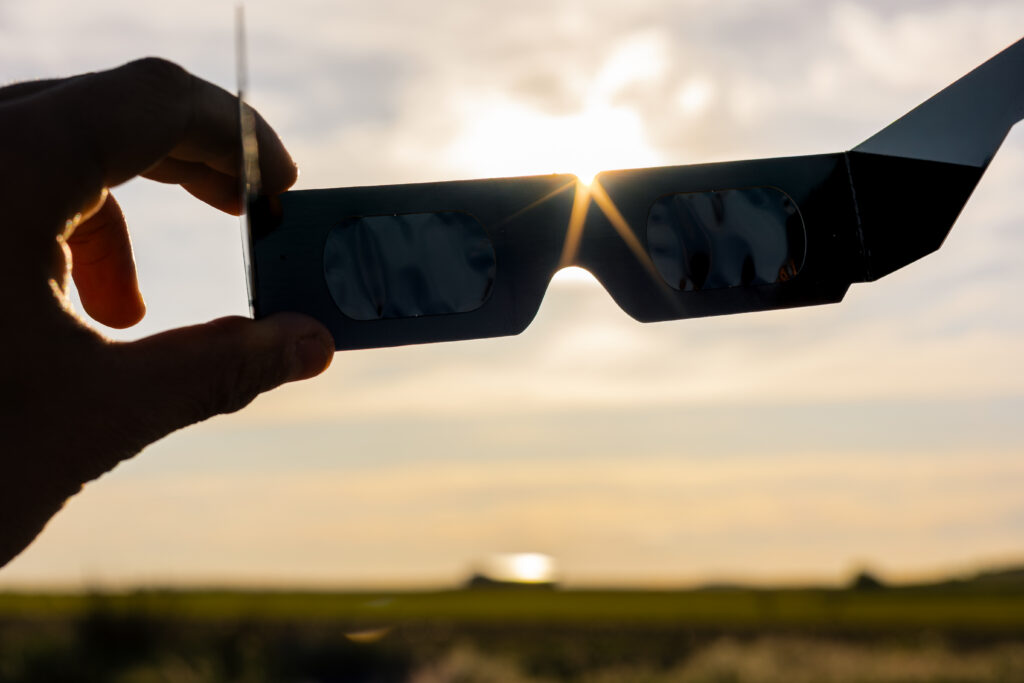
The safest ways to watch are indirect. Make a pinhole projector and stand with your back to the sun so the image falls onto a card, or watch the Royal Observatory Greenwich livestream. If you do want to look directly, use only viewers with the CE or UKCA mark, check them for scratches first, and keep them on children throughout. Sunglasses are not safe for this, no matter how dark, and take care with photos, because it is the glance up to line up the shot that harms.
If you accidentally look at the sun during the solar eclipse and if you notice blurring, distortion or changes to your colour vision afterwards, please contact your optometrist.