Cataracts are formed when the clear lens inside your eye becomes cloudy or misty. This is a gradual process that usually happens as we get older. It does not hurt. The early stages of a cataract do not necessarily affect your sight.
The only proven treatment for a cataract is surgery. If your cataract gets to the stage where it affects your sight, your optometrist will refer you to a hospital to have this done. The surgery is normally carried out under a local anaesthetic and has a very high success rate.
The main cause of cataracts is ageing. Most people who develop a cataract in one eye will eventually develop a cataract in the other eye, although one eye may be affected before the other.
Younger people can develop cataracts if they have an injury to the eye. Some health conditions such as diabetes, or taking medications such as steroids, may also cause cataracts. A very small number of babies are born with a cataract. Other causes include eye conditions such as retinitis pigmentosa, glaucoma and uveitis, and eye surgery for retinal detachment.
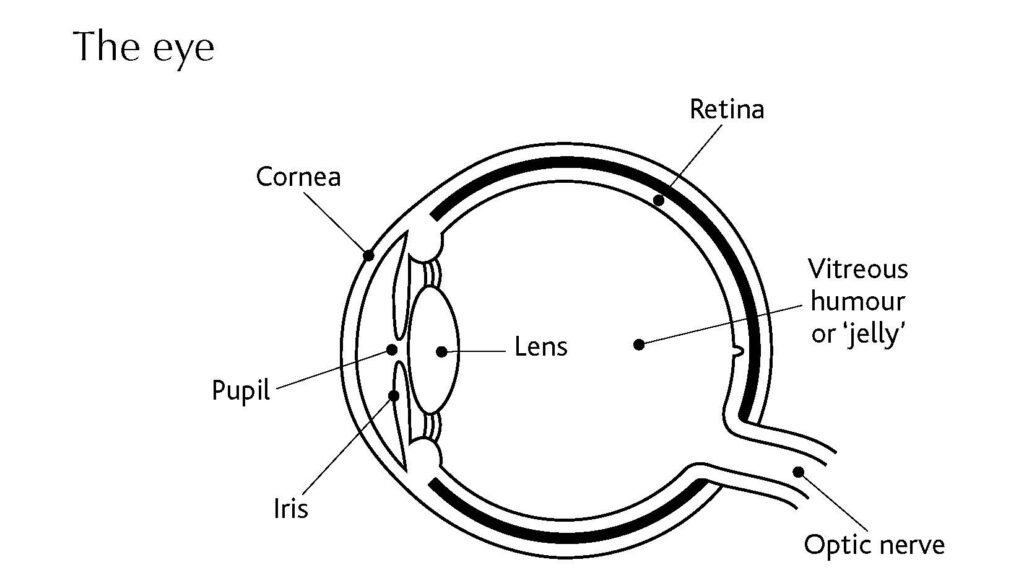
If you have cataracts you may notice that your vision is less clear and distinct. Car headlights and streetlights can become dazzling. You may experience difficulty moving from shade to sunlit areas. Colours may also look different, and become faded or yellowed. If you are long-sighted, you may even notice that you need your glasses less than you did before you had the cataract!
If you experience any of these symptoms, make an appointment to see your optometrist. Some people do not notice any changes as cataracts can develop very slowly so it is important to have regular sight tests with your optometrist to check your vision and that you are legal to drive.
If you have cataracts, you may be able to continue to drive as long as you still meet the vision standards for driving. Your optometrist will be able to advise you on this. You do not need to tell the Driver and Vehicle Licensing Agency (DVLA), or the Driver and Vehicle Agency (DVA) if you live in Northern Ireland, about your cataract unless you cannot meet the vision standards for driving.
There are various treatments which claim to cure or help slow the development of cataracts, but there is no scientific evidence to suggest that any of these can prevent or treat cataracts.
If you smoke, or spend a lot of time exposed to ultraviolet (UV) light, the risk of developing cataracts increases. You should try to stop smoking (NHS Live Well) and wear good-quality sunglasses, which carry the British Standard (BS EN ISO 12312-1:2013), the CE or UKCA mark. The risk of developing cataracts also increases if you drink a lot of alcohol or are overweight. You should try to maintain a healthy weight and limit the amount of alcohol you drink.
You cannot make cataracts worse by using your eyes too much.
If your cataract is affecting your day-to-day life (for example, driving, reading or cooking), and your vision cannot be improved enough by changing your glasses, you can ask your optometrist to refer you to an ophthalmologist (eye doctor) for surgery. This is the only proven treatment for cataracts. This involves removing the cloudy lens (the cataract) and replacing it with a clear plastic one.
You will usually have one cataract removed at a time. If you are at low risk of complications, some surgeons will carry out the operation on both eyes at the same time.
Most people find that cataract surgery is successful and are happy with the results. However, as with all surgery, there are risks involved and you should not have the operation unless you feel it is right for you. Before you have surgery your surgeon will discuss the risks with you.
If a cataract is not interfering with your daily life, it is safe to leave it in your eye. If you choose not to have surgery, you will not be able to see as well as the cataract gets worse. The cataract does not have to become severe (sometimes described as ‘ripe’) for you to have the operation.
You will have an initial appointment where you will be asked about your general health. This is to help make sure that the operation is suitable for you. In some parts of the UK, an optometrist may discuss the operation with you in a local practice rather than you having to go to hospital for this appointment.
Most cataract operations are done using a local anaesthetic. You will be awake, but the ophthalmologist will make sure you cannot feel the area around your eye. You may also be offered sedation, and in some exceptional cases, cataracts may be removed under general anaesthetic.
The ophthalmologist will assess and measure your eyes to decide what strength lens to put in your eye during the operation. Wearing contact lenses may affect the accuracy of these measurements. If you wear contact lenses you must leave them out at least a week before you have these measurements taken, but the hospital will advise you of this.
You will hear the ophthalmologist explaining what they are doing, and you may see some vague movements around your eye. The ophthalmologist will make a tiny cut in your eye to remove the cataract. They will then insert the new lens so that you can see clearly. This will usually take around 15 to 45 minutes.
The ophthalmologist may also be able to correct short- or long-sightedness with the new lens. This means you may not need to wear your glasses as much after the operation as you did before.
You will not normally need stitches, but your eye will be covered to protect it from knocks after the operation. You will be allowed to go home the same day, but should have someone with you to look after you for 24 hours after surgery. You should not drive on the day of your surgery.
You will be given eye drops to use for the first few weeks after your operation.
You should avoid:
You can:
Ask your ophthalmologist about when you can go back to work. If you have any concerns, contact the eye clinic where you had the surgery, or your optometrist, as soon as possible for advice.
Your eyesight will settle down in a few days or weeks. After cataract surgery, some people need to wear glasses. Your optometrist will be able to advise you on this. If you wore glasses before the operation, you will probably find that they will need changing after the operation, so you will need to see your optometrist again once you have fully recovered from the surgery and finished the full course of eye drops.
You may find that it takes a few weeks to get used to your new glasses after cataract surgery. This is normal and is due to your brain adapting to a different prescription.
After some months or years, you might notice that your vision becomes cloudy or misty again in the eye where the cataract has been removed. This is not the cataract returning, but is due to the sac which contains the replacement lens clouding up. This is a common complication following cataract surgery and can happen in 1 in 5 or 20% of cases. You can have this cloudiness removed by painless laser treatment in a matter of minutes. Contact your optometrist if you are worried that this is happening to you.
If you have had a cataract removed from one eye, it is likely that you will need the same treatment for the other eye at some point in the future.
The Royal College of Ophthalmologists
Last updated: February 2026